
For decades, the word “office” conjured images of uniform desks under fluorescent lights in bland, modern towers. But as I walk the streets of the capital this year, it is clear that something has shifted. Beneath the stone façades and period details of London’s historic architecture, a workplace revolution is quietly unfolding.
In 2026, the data suggests that the city’s most innovative Office Space London is found not in new skyscrapers, but within the walls of its heritage buildings. If you are considering office rental London, you might be surprised to find that the future of work is hidden in the past.
Don’t settle for a glass box. Discover London workspace options that tell a story.
Find Your Historic GemInstead of building from the ground up, developers are breathing new life into older structures. They are preserving unique character while injecting hyper-modern functionality. This approach blends the city’s rich architectural heritage with the demands of today’s workforce, creating commercial property London that is anything but generic.
Consider two flagship examples of this architectural alchemy I recently toured:
This strategy does more than just provide space; it preserves history while offering a unique environment that new builds struggle to replicate.
The modern workplace is evolving beyond a simple place to plug in a laptop. The focus has shifted to creating an experience that fosters community, well-being, and a vibrant company culture. When comparing serviced office vs traditional lease options, these reimagined historic buildings stand out because they are packed with features designed to make the office a destination.
Specific examples from these properties highlight the trend:
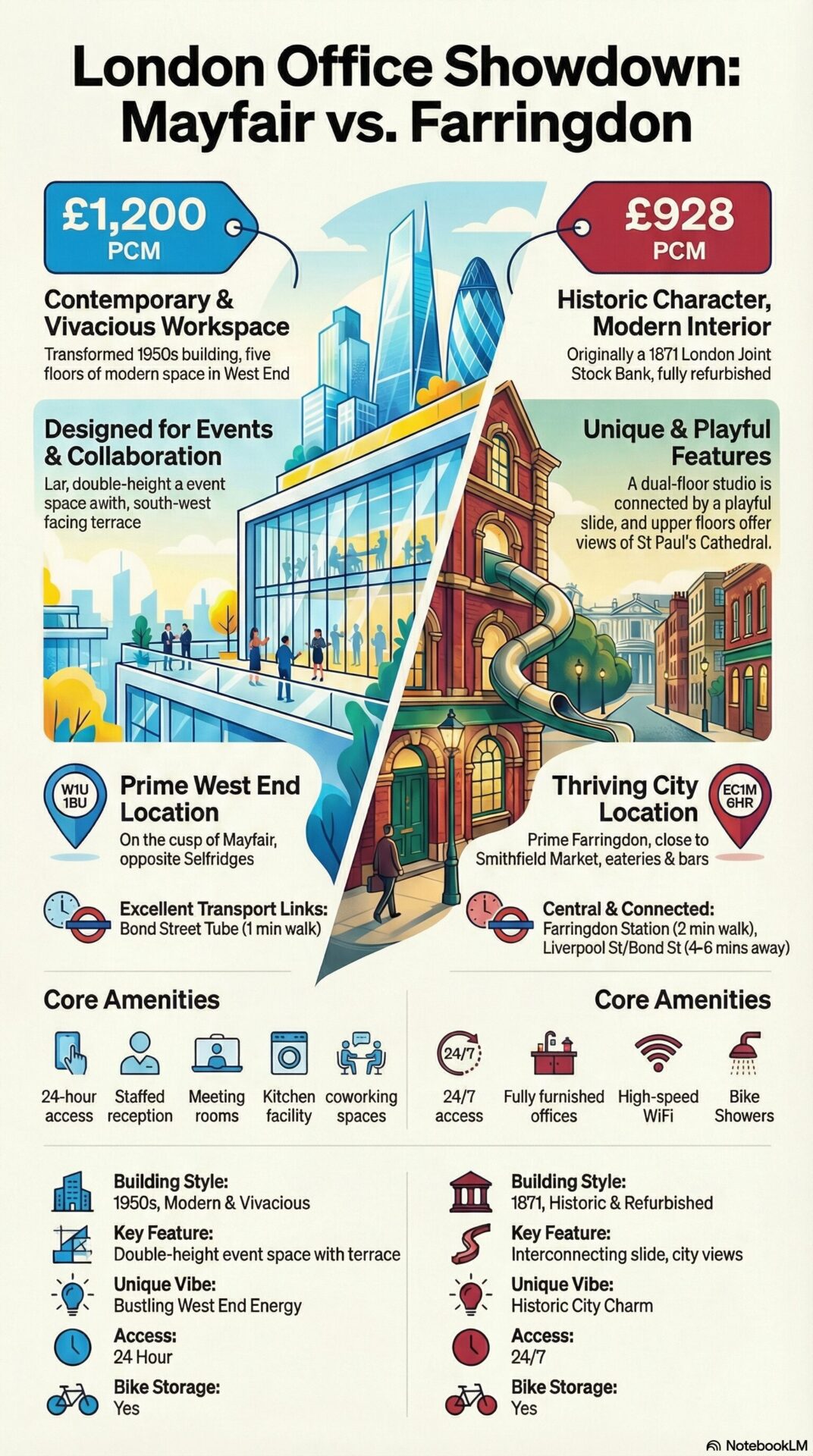
Old World Charm meets New World Amenities.
This focus on integrated lifestyle amenities is not isolated; it appears in the renovation of both Victorian-era banks and mid-century commercial buildings. These are strategic additions designed to make flexible office space a central hub for collaboration.
Slides, terraces, and sunset views—see what serviced office costs cover in 2026.
Explore AmenitiesA key advantage of these repurposed buildings is their unparalleled locations, placing businesses at the very heart of the city’s commercial and cultural life.
The Parcels Building has the “bustle of Oxford Street… seconds from your door,” is located “opposite the iconic Selfridges,” and is just a “1 minute walk” from Bond Street Tube. Meanwhile, the Charterhouse Street office sits in “Prime Farringdon,” at the “heart of this thriving City,” where offices on the upper floors give “expansive views over such landmarks as St Paul’s Cathedral.”
Crucially, these offices contrast their energetic external surroundings with calm, focused interiors. They offer a sanctuary for productivity amidst the city’s dynamism, achieved through thoughtful design, such as glazed roof lighting that floods the space with daylight.
This evolution proves that the future of work isn’t just about technology; it’s also about the creative and thoughtful reinvention of our physical spaces. As the line between work and life continues to blur, what does your ideal workspace look like, and could it be hidden inside a building you walk past every day?
Whether you choose the historic charm of Farringdon or the vivacious energy of Mayfair, the Office Space London market has never been more exciting.
From Victorian banks to mid-century modern hubs, we have the keys to London’s best kept secrets.
View All Listings