
In the high-stakes game of London commercial real estate, location has always been the undisputed king. A Mayfair postcode, it’s assumed, demands a non-negotiable premium. But what if it doesn’t? What if finding the perfect Office Space London is less about budget and more about identity?
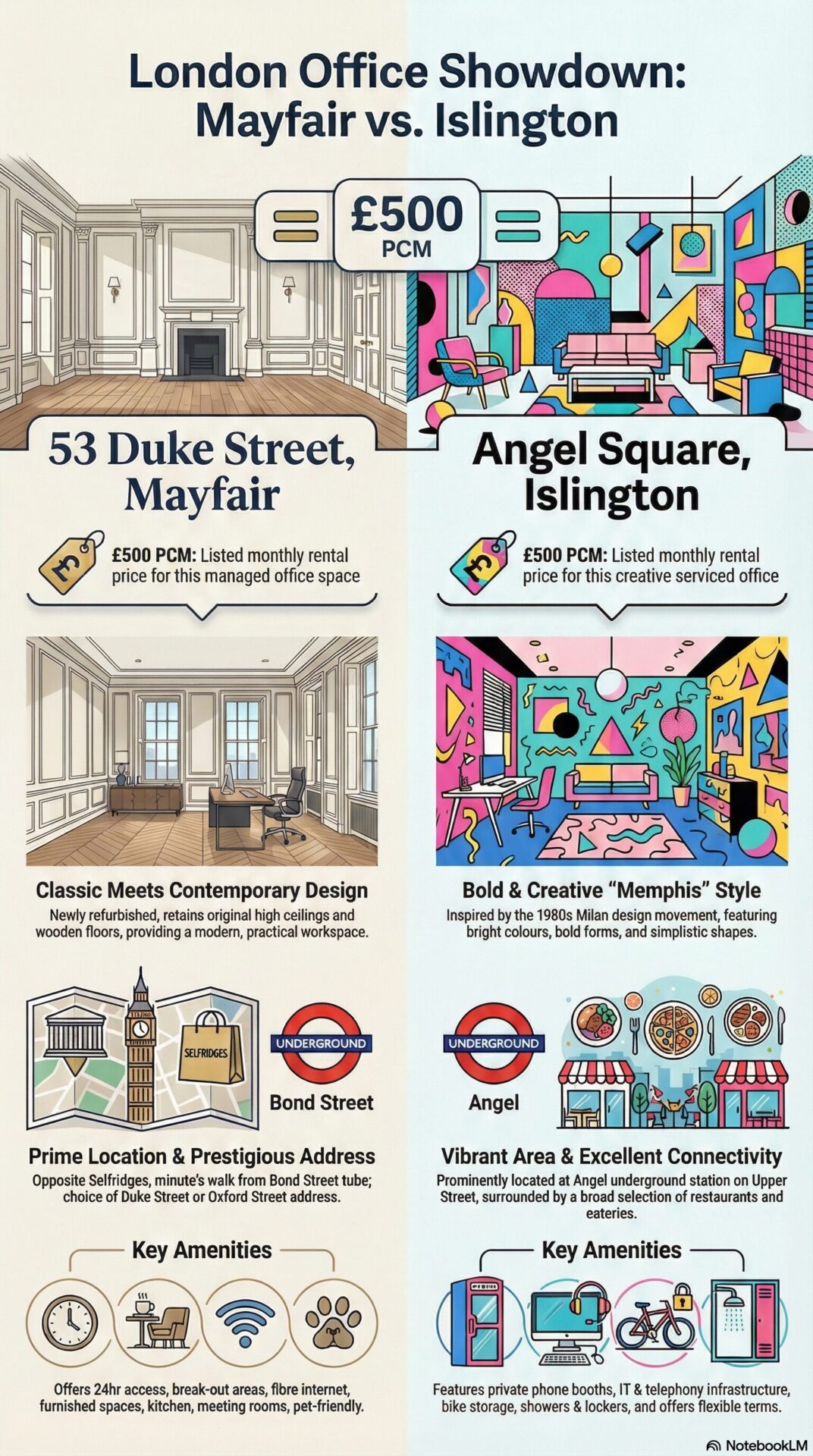
Our recent analysis of office rental London data uncovered a striking data point that challenges this core assumption: two prime offices in fundamentally different London neighborhoods—Mayfair and Islington—are both available for the exact same price of £500 PCM. This discovery reveals that an office’s true value is a complex equation of location, design, and culture.
This post will explore the three most strategic takeaways from this comparison, revealing what truly defines a workspace’s worth. Are you paying for the prestige of the past, or the innovation of the future? When evaluating serviced office costs, the answer might surprise you.
1. Prime London Comes in More Than One Flavor
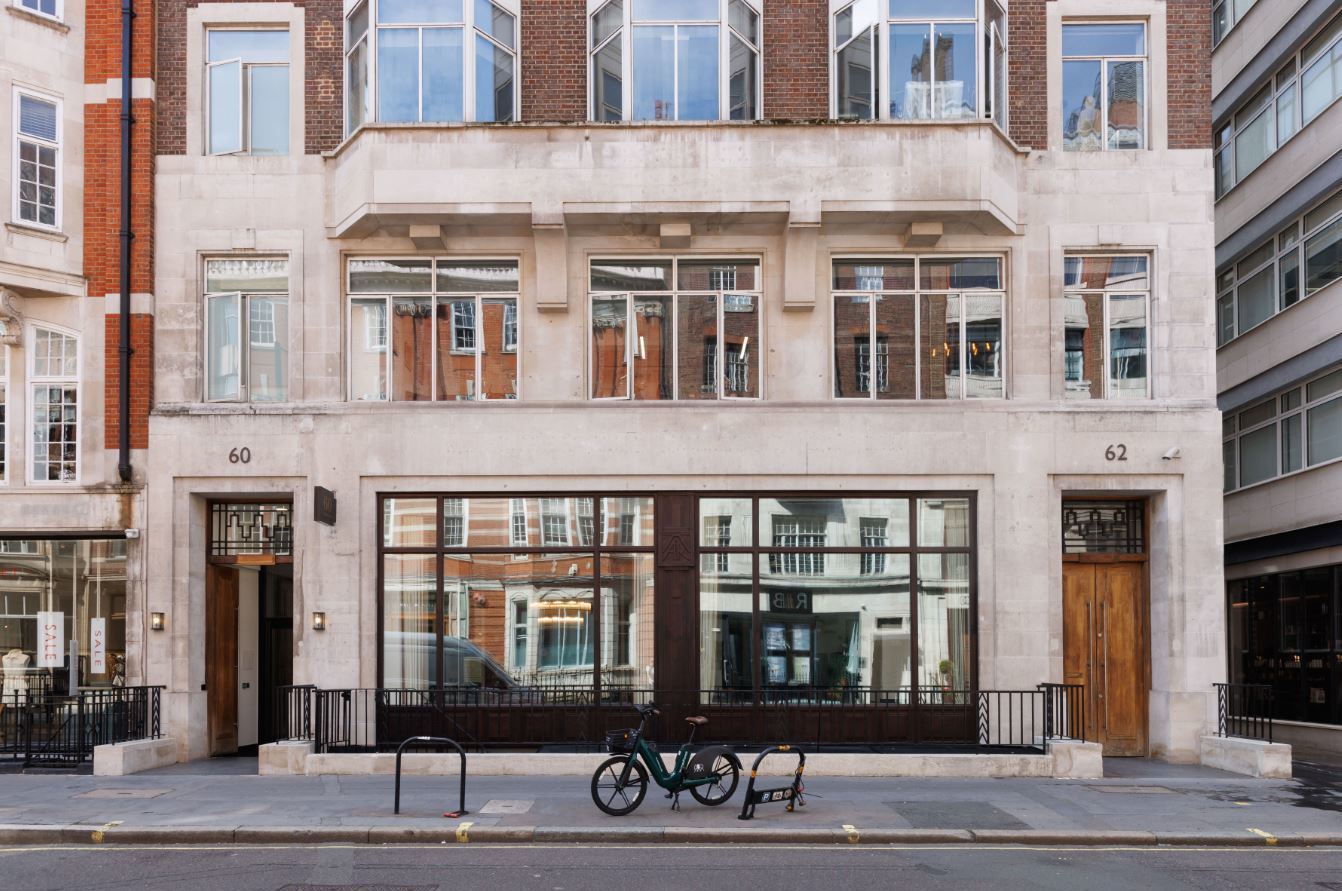
Our analysis begins with the location paradox. The first office, at 53 Duke Street in Mayfair, is planted firmly in London’s traditional center of gravity. Situated opposite Selfridges and cornering with Oxford Street, it’s a minute’s walk from Bond Street station. This isn’t just about convenience; it’s a statement of proximity to global luxury retail, high finance, and an established, high-status client base. The unique option to choose either a Duke Street or Oxford Street address further cements its prestigious positioning.
In stark contrast, Angel Square in Islington is at the heart of the area’s creative and social buzz. Located on Upper Street, with its “broad selection of restaurants and eateries,” and “couldn’t be closer” to Angel station, its value is defined by its vibrant local culture. This environment signals a different kind of prime—one built on a social infrastructure that supports team lunches, after-work collaboration, and a dynamic community, making it a magnet for tech and media firms.
What this data suggests is a major shift in the London office market, where cultural fit and operational functionality are now competing directly with the traditional currency of a prestigious postcode. In the battle of commercial property London, variety is the new standard.
Price Parity (Monthly Per Desk)
2. You’re Choosing a Personality, Not Just a Desk
Beyond geography, the design of each space serves as a clear indicator of its intended business personality. The Mayfair office is a newly refurbished space designed to “embrace the building’s original high ceilings and wooden floors whilst offering a modern and practical workspace.” This aesthetic is a deliberate form of brand signaling, communicating stability, tradition, and quiet confidence—an ideal backdrop for a consultancy, law firm, or private wealth manager.
The Islington office, however, broadcasts a completely different message. Its design inspiration comes from the audacious Memphis movement of the 1980s, an aesthetic philosophy defined by its use of:
“…bright colours, bold forms and simplistic shapes.”
This is a workspace as a mission statement, projecting innovation, disruption, and creative energy. It’s an intentional choice for a startup, design agency, or media company building a forward-thinking brand. The strategic implication is clear: for an identical investment, a company can project either established prestige or disruptive creativity. The choice is no longer dictated by budget, but by brand identity. When considering serviced office vs traditional lease, remember that serviced options allow you to try on these identities with less risk.
3. Amenities as a Manifesto: What Your Office Perks Really Say About You
The cultural infrastructure of each office is most clearly revealed in its amenities. The specific perks on offer are not just conveniences; they are a manifesto for the type of talent a company wants to attract and the work style it intends to foster.
| Mayfair Highlights (53 Duke St) | Islington Highlights (Angel Sq) |
|---|---|
| Pets allowed | Private Phone Booths |
| Choice of Duke St or Oxford St address | Bike Storage & Showers |
| Three kitchens | Large co-working / drop-in space |
| Communal meeting rooms | Flexible Terms |
The analysis is telling. Mayfair’s amenities reinforce its focus on prestige and a progressive, wellness-oriented employee value proposition. The choice of a high-status address is a powerful branding tool, while a pet-friendly policy is a key differentiator for attracting talent that values work-life integration. Islington’s package, conversely, is purpose-built for a modern, agile workforce. The combination of bike storage, showers, and flexible terms supports sustainability and non-traditional work arrangements, while phone booths and co-working spaces provide the operational agility needed for both focused work and spontaneous collaboration.
Conclusion: What’s Your Workspace Worth?
Our analysis reveals that when it comes to office space, the price tag is merely the entry point to a much deeper strategic conversation. For the same cost, a business can secure a postcode that signals heritage or a cultural hub that broadcasts innovation. It can choose a design that communicates stability or one that champions disruption. The real value is found by moving beyond the rent and aligning the unique combination of location, design, and amenities with core business goals—from brand identity to talent acquisition.
So, when you evaluate your next London workspace, will you be paying for a postcode, or investing in a culture?